
SPEED
EASY NAVIGATION
QUICK RESPONSES
DIRECT SHIPMENTS
GLOBAL SUPPORT
EXCELLENCE
QUALITY SUPPLIERS
PROMPT SERVICE
SATISFACTION IS
#1 PRIORITY
ECONOMICS
LOWEST PRICES
FREE FREIGHT
QUICK DELIVERIES
KNOWLEDGE
FACTORY TRAINED
OTJ EXPERIENCE
ENGINEERING SUPPORT
Compressed Air Water Separators
What they remove and how to choose one
Need a compressed air water separator sized for your compressor and liquid load?
We reply the same business day.

Compressed air systems can carry liquid water, oil and solid particles downstream. A centrifugal air-liquid separator removes entrained liquid droplets and particles from the air stream. It does not remove water vapor or lower the air’s dew point.
That distinction helps determine where a separator belongs, which design to use and whether a dryer is also needed.
How moisture gets into compressed air
Ambient air contains water vapor. Compression heats the air, and cooling it in an aftercooler can cause some of that vapor to condense into liquid. Further cooling in the receiver or distribution piping can create more condensate. Oil droplets and solid particles may also be present, depending on the compressor and the condition of the system.
Liquid can collect in low points in the piping. If it is later swept downstream, it may travel as a slug. That can expose downstream equipment to more liquid at once than a drain at the low point can remove.
A float drain trap empties liquid that has collected in the trap or drip leg. A separator serves a different purpose: it removes entrained liquid from the moving air stream and can handle liquid slugs when the separator design is suitable for that duty.
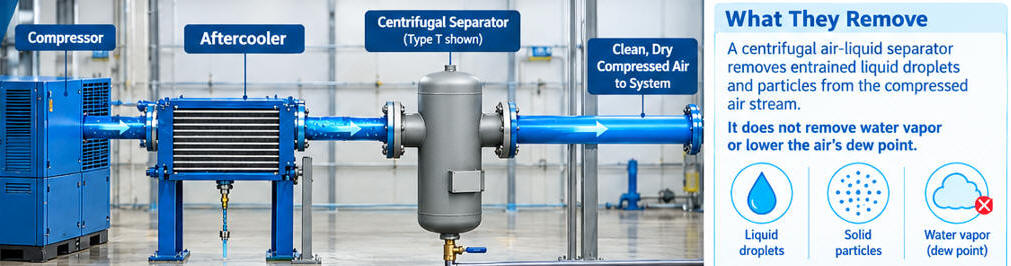
Figure 1. Cooling after the compressor turns water vapor into liquid that a separator can remove
What a centrifugal compressed air separator removes
Centrifugal air-liquid separators remove entrained droplets and particles larger than 10 microns with 99% efficiency. Coalescing variations improve that to droplets larger than 5 microns, and a polishing cartridge after the vortex can reach droplets larger than 0.3 microns.
Inside the separator, the incoming air follows a path that deflects it away from the outlet. Heavier droplets and particles impinge on internal surfaces and coalesce. The larger separator body also reduces air velocity, allowing separated liquid to move toward the vessel wall and drain area.
The separators maintain separation efficiency at low flow when sized for the maximum flow condition. Proper sizing and drainage remain important: collected liquid must be removed before it can rise high enough to leave with the air. Product styles are covered on Air-Liquid Centrifugal Separators.
What a water separator does not remove
A centrifugal separator removes liquid droplets. It does not remove water that remains in vapor form, and it does not lower the compressed air’s dew point.
If compressed air cools farther downstream, additional water vapor may condense into liquid. A separator can remove that newly formed liquid only if it reaches the separator as entrained droplets. To control the dew point, select a compressed air dryer for the required operating conditions. A coalescing separator can separate fine liquid aerosols, but it does not dry the air or lower its dew point.
A compressed air/water separator is also different from a hydronic air separator. A hydronic separator removes free air from a closed water loop. A compressed air separator removes entrained liquid from a pipeline of compressed air. That difference is explained in Air Separator Tanks vs Air/Liquid Separators.
Where to install a compressed air moisture separator
A common location is downstream of the aftercooler, where cooling has condensed moisture from the compressed air. Separators may also be used ahead of equipment that should be protected from entrained liquid, or at other locations where liquid is expected in the line.
The right location depends on the system layout, the source and amount of liquid, and the requirements of downstream equipment. A separator does not replace a dryer when the application requires a specified pressure dew point.
Choosing between L-style and T-style separators
The L and T styles are commonly used in compressed air systems, but their liquid-handling capabilities differ.
An L-style separator has a horizontal cylindrical body and a compact layout. Liquid capacity is about 5% of maximum rated mass flow, and the design is unsuitable for handling liquid slugs. It may be appropriate when space is limited and the expected liquid load is within the model’s rating.
A T-style separator has its inlet and outlet in line, with the separator body extending perpendicular to the piping. Liquid capacity is 40% of maximum rated mass flow, and T-style models will separate liquid slugs. Confirm the liquid capacity and allowable operating conditions for the specific model during selection.
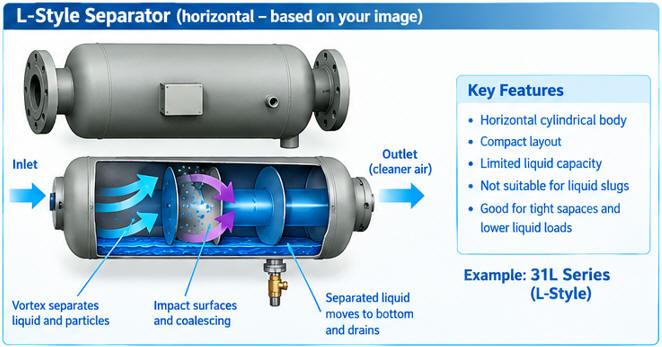
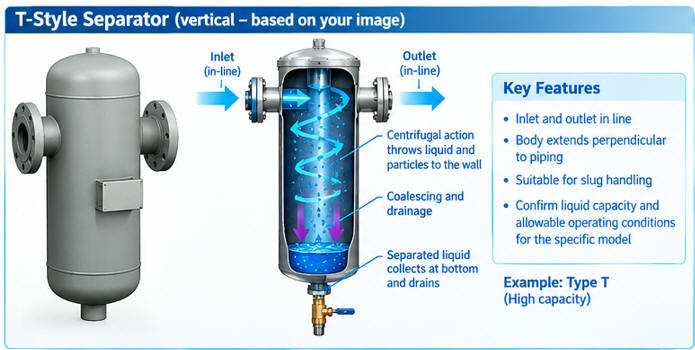
Figure 2. L-style is compact and limited on liquid load; T-style handles slugs
Other body configurations are available for different piping orientations. Choose a design that matches the installation, expected liquid load and downstream requirements. Capacities by style are listed on Separators Grouped by Liquid Separation Capacity.
Separator sizing depends on operating conditions
The separator body size is not necessarily the same as the connected pipe size. Selection depends on factors that include:
- Maximum flow rate
- Minimum operating pressure
- Design temperature
- Estimated liquid load
- Whether liquid slugs are possible
- Compressor type
- Available space and piping orientation
For reciprocating compressors, use twice the rated flow for the sizing charts or calculator. Confirm that guidance against the specific compressor and separator application before finalizing a selection. The gas-liquid separator sizing tool will return a minimum body size from molecular weight, maximum temperature, minimum pressure and flow.
Drainage is part of separator selection
Separated liquid needs a reliable way to leave the vessel. A float drain trap is a common automatic method for removing condensate while preventing compressed-air loss. The drain must be suitable for the expected liquid rate and contaminants; dirty or oily condensate can affect drain operation.
The separator and drain should be selected as a system. If the drain cannot keep up, liquid can accumulate and may be carried out through the separator outlet.
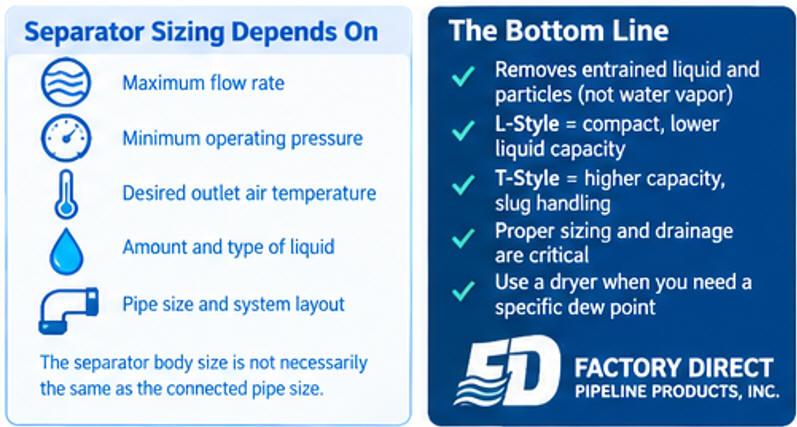
Figure 3. Compressed Air-Liquid Separator Guidelines
Information to provide when requesting a size
For a sizing review, provide the maximum flow, minimum operating pressure, design temperature and an estimate of the liquid load. Also note whether the compressor is reciprocating, whether slugs are possible, the existing pipe size, the piping orientation and any limits on materials or pressure-vessel code requirements.
Those details help determine the separator body size and style, connection arrangement, and drain requirements.
Required body size may differ from the existing pipe size. A sizing review should check the separator’s flow rating, pressure drop, liquid-handling capability and connection arrangement rather than relying on pipe size alone.
Eliminate the guesswork. Send us the flow, pressure, temperature and liquid load for confirmation of size, cost and lead time.
We reply the same business day.